A small freezer for ice cream has one job: hold -5°F to 0°F without swinging. That grainy pint from your kitchen freezer wasn’t bad luck, it was cycling temperature. Retailers rank these units on cubic feet and price, numbers that say nothing about texture. I checked three compact freezers against manufacturer spec sheets and defrost behavior instead.
By the end you’ll know which household size and kitchen fit each unit, who should buy which one, and where to look for our guide to the best refrigerator brands if a dedicated freezer isn’t the right fix.
Our Top Picks at a Glance
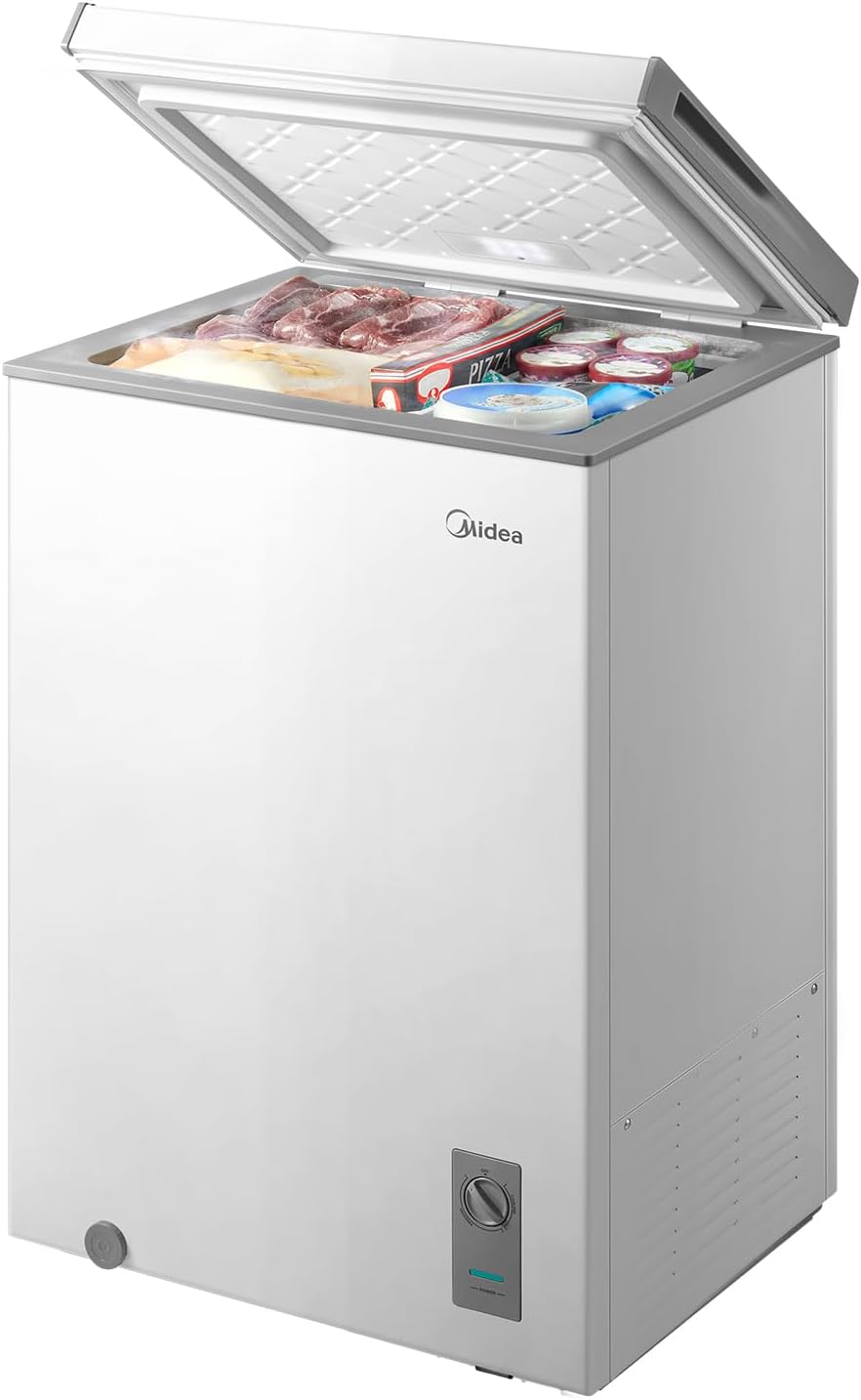
- Capacity (Cu Ft): 5.0
- Style: Chest, manual defrost
- Coldest Rated Temp: -13°F (mfr)
- Garage Rated Ambient: Not published
- Noise Level (dBA): Under 43 dBA (mfr)
- ENERGY STAR: Not certified
- Lock Included: No
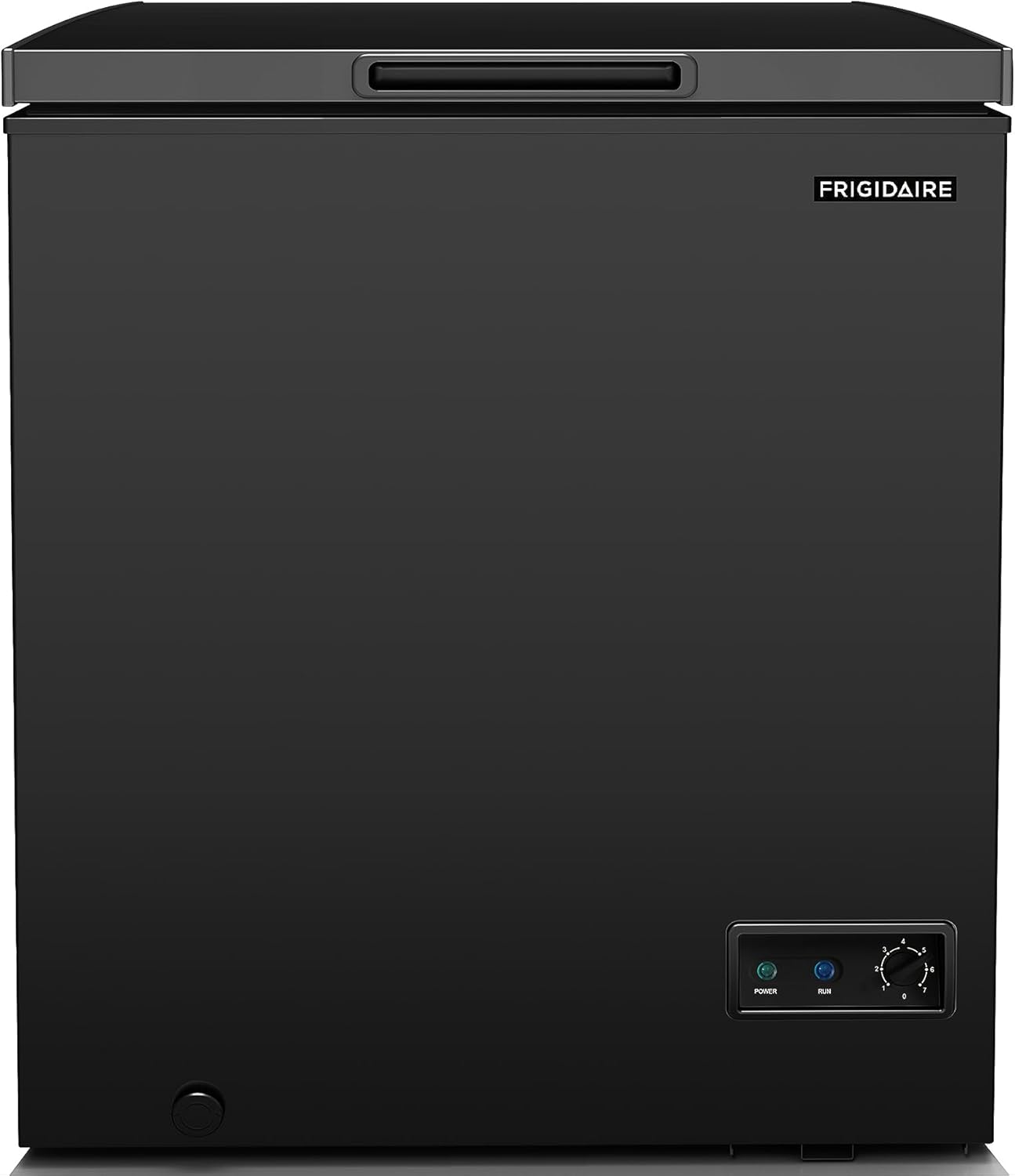
- Capacity (Cu Ft): 5.0
- Style: Chest, manual defrost
- Coldest Rated Temp: -12°F (mfr)
- Garage Rated Ambient: 0°F to 110°F (mfr)
- Noise Level (dBA): Under 45 dBA (mfr)
- ENERGY STAR: Not certified
- Lock Included: No

- Capacity (Cu Ft): 1.1
- Style: Upright, manual defrost
- Coldest Rated Temp: -11°F to 10.4°F (mfr)
- Garage Rated Ambient: Not rated
- Noise Level (dBA): Under 42 dBA (mfr)
- ENERGY STAR: ENERGY STAR listed
- Lock Included: Cylinder lock, two keys
The Midea MRC050S0AWW wins this table. A published floor of -13°F leaves real headroom below the -5°F to 0°F ice cream range, and manual defrost avoids the cycling that coarsens texture, the combination that matters most for stocking more than a handful of pints.
1. Midea MRC050S0AWW 5.0 Cu. Ft. Chest Freezer Review
The Midea MRC050S0AWW is a 5.0 cubic foot manual-defrost chest freezer built for anyone who stores more ice cream than a kitchen freezer door can hold. Its verdict: the coldest verified floor in this roundup at -13°F, with a defrost style that keeps that floor stable. Nothing else here documents that much headroom below the -5°F target.
- Mechanical thermostat, verified -13°F floor
- Balanced hinge lid holds open
- One removable hanging wire basket
- Front-access defrost drain and scraper
- Flat back fits tight against walls
What This Unit Physically Takes Up in Your Room
Exterior dimensions run 24.7 inches wide by 21.7 inches deep by 33.5 inches tall, small enough for a garage corner or basement nook. The real constraint is overhead, not floor space: the lid needs roughly three feet of swing clearance, and that kills more installs than a tight floor plan. Measure the shelf above your intended spot tonight.
How Cold It Actually Gets for Frozen Dessert
The Midea’s rated floor of -13°F sits well below what ice cream actually needs. The IDFA’s recommended ice cream storage temperature is -5°F to 0°F, and Midea’s spec sheet puts this unit’s coldest setting more than seven degrees past that floor. That headroom matters most in July, when a warm kitchen and a few extra lid openings push the interior up before the compressor catches back up.
What We Love About the Midea MRC050S0AWW
The Deep Cold Headroom That Keeps Pints Scoopable
Deep cold storage slows ice recrystallization, the process that turns smooth ice cream into a sandy, gritty mess. Research on recrystallization under cycling storage temperatures found that temperature swings damage ice crystal structure more than a constant, colder setting does, and manual defrost is exactly what avoids those swings.
A household stocking eight pints through a July heat stretch gets real insurance from that -13°F floor. Trade-off: colder storage means a longer counter rest before scooping.
Why the Chest Shape Beats Uprights on Warm Days
Cold air sinks, so a top-opening lid loses far less of it than a front-swinging door every time you reach in. Owners who’ve traded an upright back for a chest describe faster recovery after a long rummage through the basket. Same physics as water in a bathtub: lift the lid and the cold stays put. The trade: better temperature hold, worse organization for pints buried three deep.
The Balanced Hinge That Frees Both Your Hands
The lid holds itself open between 45 and 75 degrees, so you’re not bracing it with a shoulder while unloading groceries. That matters when setting a warm bag down one handful at a time, because every extra second the lid hangs open is warmed surface sitting on your pints. One person can position this freezer alone, no delivery crew required.
The Wire Basket Problem Nobody Mentions Before Delivery
One hanging basket covers the top few inches; everything below it disappears fast into a wall of frost. Owner reports flag a fixed interior step that already eats into the advertised 5.0 cubic feet. Buried pints grow freezer burn. Fix it before delivery day:
- Add two stackable bins sized to the basket width.
- Label bins by flavor category, not by date.
- Keep the bottom third for backstock, not daily grabs.
Who Should Buy the Midea and Who Should Skip It
The Buyer This Chest Freezer Was Built For
Buy this one for stockpiling bulk pints, homemade batches, or seasonal overflow a kitchen freezer door can’t hold. It fits households with a garage, basement, or utility corner with overhead lid clearance to spare. Verdict: buy for floor space and long-term storage, not for one pint after dinner.
The Buyer Who Should Choose Something Else
Skip this in an apartment with no floor space to spare; the Whynter upright below fits where this chest cannot. Skip it too for an unheated garage in a cold climate, since Midea doesn’t publish an ambient range the way Frigidaire does.
- Pros: Verified -13°F floor, deepest headroom here
- Pros: Manual defrost avoids damaging temperature cycling
- Pros: Exterior-adjacent thermostat, no lid dump
- Pros: Front-access drain simplifies annual defrost
- Cons: Fixed interior shelf shrinks usable volume
- Cons: No temperature readout on the dial
2. Frigidaire EFRF5003 5.0 Cu. Ft. Chest Freezer Review
The Frigidaire EFRF5003 is a 5.0 cubic foot chest freezer built for the budget shopper who still wants a garage-ready rating and real thermostat control. Its verdict: the finest temperature adjustment here, seven dial positions instead of a single low-medium-high guess, at the lowest tracked price of the three. The catch is a brand story most listings skip.
- Garage-ready 0°F to 110°F rating
- Exterior seven-position temperature control
- Power-on indicator light
- Removable vinyl-coated wire basket
- Aluminum interior liner, front drain
The Garage Rating and What It Actually Promises
Frigidaire’s spec sheet states stable operation across a 0°F to 110°F ambient range, the widest documented swing in this roundup. That rating protects the compressor from extreme heat and cold, not your ice cream’s texture directly.
A garage swinging from 100°F to 20°F across seasons won’t damage this unit the way it would an indoor-only model.
Seven Thermostat Settings and Which One Ice Cream Needs
A numbered dial means nothing without a thermometer confirming what’s happening inside. The IDFA’s target is -5°F to 0°F, and Frigidaire doesn’t publish which of the seven settings lands there, though owners of a related 5.0 cubic foot model report setting 5 running close to -5°F. Treat that as a starting point, not a guarantee:
- Set the dial to position 5 on day one.
- Park an appliance thermometer in the basket for 24 hours.
- Adjust one position at a time until the thermometer reads -5°F to 0°F.
What We Love About the Frigidaire EFRF5003
Exterior Controls Mean You Never Open the Lid
A front-mounted dial lets you adjust the temperature without dumping cold air out of the cabinet. It sounds small, but it matters during the first week of dialing in a setting, when you’re checking and rechecking constantly. Competing chest units with interior-only dials force you to prop the lid on a shoulder for every adjustment.
The Aluminum Liner Versus Cheap Plastic Interiors
An aluminum liner conducts cold faster than plastic and holds up to scraper contact during the annual defrost. Plastic liners crack at the corners when owners chip frost aggressively instead of waiting for it to soften. A household holding thirty pints through a full defrost cycle needs a liner that survives the scraping.
Why Owner Volume Matters More Than Any Spec Sheet
Thousands of verified owner ratings surface failure patterns a single spec sheet never will. Pulling the recurring complaint themes matters more than averaging star ratings, since a strong average can hide a problem affecting one buyer in twenty.
One disclosure worth knowing: the Frigidaire name on this freezer is licensed to Curtis International, not built by Electrolux, the company that owns the trademark and the full-size Frigidaire line. Service and parts route through Curtis, not Electrolux’s network.
The Manual Defrost Reality After Six Months
Manual defrost means frost creep, and frost creep steals storage space over time. Owners of similar chest units report an annual defrost as the realistic cadence, not the twice-a-year pace some manuals suggest. Schedule it for the week your stock runs lowest, since humid rooms accelerate buildup faster than a dry garage.
Who Should Buy the Frigidaire and Who Should Skip It
The Garage Stockpiler This Chest Freezer Serves Best
Buy this one for an attached garage or unheated basement, where the 0°F to 110°F rating actually gets used. It also suits buyers who want the largest owner review pool behind their purchase. Verdict: garage placement, dead-simple controls, lowest price in this roundup.
Who Will Regret This Chest Freezer Within a Month
Skip this one storing under six pints, since you’d be running a full-size compressor to cool mostly empty air. Kitchen placements with no spare floor footprint should look at the Whynter upright covered below instead. Confirm your floor space with the lid fully raised, not the closed footprint on the tape measure.
- Pros: Seven-position thermostat, finest control here
- Pros: Garage-ready across a 0°F to 110°F range
- Pros: Exterior dial, no lid-opening to adjust
- Pros: Lowest tracked price of the three units
- Cons: No published minimum temperature from Frigidaire
- Cons: Licensed brand, not built by Electrolux
3. Whynter CUF-112SS 1.1 Cu. Ft. Upright Freezer with Lock
The Whynter CUF-112SS is a 1.1 cubic foot upright freezer built for a room with zero floor space to spare, not a stockpile. Its verdict: the only unit here with a published noise rating, ENERGY STAR certification, and a lock, the combination that makes it the sole real option for a bedroom, dorm, or shared apartment. Capacity is the trade for that footprint.
- Fan-circulated cooling, even shelves
- Cylinder lock, two keys included
- Reversible swing door, flush back
- ENERGY STAR listed, UL certified
- One removable slide-out wire shelf
What 1.1 Cubic Feet Really Holds in Pints
Interior dimensions run roughly 13.5 inches wide by 12.9 inches deep, with one shelf splitting the cabinet into two levels. That translates to a realistic stash, not a bulk haul, somewhere around a dozen to fifteen standard pints once the compressor step eats into the rear-bottom corner. Enough for regular rotation, not a Costco run.
Is This the Best Small Freezer for Ice Cream Storage?
It depends on your pint count: the Whynter holds the range, but its warm end reaches further than the other two units here. Whynter’s own product page lists -11°F to 10.4°F, and that top number sits well above the IDFA’s -5°F to 0°F target.
A mechanical dial with no digital readout means you won’t know which end you’re sitting on. The trade: less capacity and a wider swing, for the quietest, most secure freezer here.
What We Love About the Whynter CUF-112SS
The Lock That Ends the Missing Pint Argument
A cylinder lock with two keys secures the contents from roommates, kids, or anyone else with freezer privileges. It’s a rare feature at this size, and the reason plenty of buyers choose this unit over a cheaper alternative. A shared apartment where the mint chip kept mysteriously vanishing is exactly the scenario this solves.
Fan Circulated Cooling Versus Static Cold Boxes
Fan-circulated cooling moves air through the cabinet, so the top shelf and bottom floor track closer to the same temperature. Static compact freezers let the top shelf run warmer than the base, since cold air just sinks without help. Whynter rates this unit under 42 decibels, the only manufacturer-published noise figure in this roundup.
Why the Published Energy Numbers Disagree With Each Other
Retail listings for this exact SKU show conflicting annual energy figures, some at 215 kWh per year and others at 251, alongside a narrower temperature range than Whynter’s own product page states.
The ENERGY STAR product database is the governing source here, not a retailer’s spec bullet. Two sellers, two different numbers, for the same physical freezer.
Who Should Buy the Whynter and Who Should Skip It
The Apartment Buyer This Upright Freezer Was Made For
Buy this one for a small kitchen, dorm, office, or any room with zero spare floor space. It suits households that want daily access and a lock more than bulk volume. A countertop freezer option is worth a look too, when floor space is the wall you’re hitting, though it won’t match this unit’s cold range or lock. Verdict: buy for access and security, not for stockpiling a season’s pints.
The Buyer Who Will Outgrow It Immediately
Skip this one buying pints by the case, since either 5.0 cubic foot chest above holds far more for similar money. Skip it too for an uninsulated garage, since this unit isn’t rated for that environment the way the Frigidaire is.
- Pros: Only published noise rating, under 42 dBA
- Pros: ENERGY STAR and UL certified
- Pros: Cylinder lock secures shared-household contents
- Pros: Reversible door fits either approach direction
- Cons: Warm end of range reaches 10.4°F
- Cons: Compressor step eats already-small capacity
The Buyer’s Guide: Cutting Through the Hype
The Three Specs That Decide Ice Cream Texture
Coldest rated temperature, temperature stability, and air circulation decide ice cream texture, not cubic feet. The IDFA places storage between -5°F and 0°F, a five-degree window most freezer listings never mention. Temperature stability means how little the interior swings between compressor cycles, the thing manual defrost protects and auto-defrost undermines. Buy a freezer thermometer before you buy the freezer.
The Price Tier Truth in Compact Freezers
| Tier | Defrost | Thermostat | Liner | Lock |
|---|---|---|---|---|
| Budget | Manual | Single dial or 7-position | Plastic or aluminum | No |
| Premium compact | Manual, fan-assisted | Mechanical, no readout | Plastic | Sometimes |
Budget tier buys volume and hands you frost creep and zero lock in return. Premium compact tier buys air circulation and certified energy performance, at a steep cost per cubic foot. The chest style wins on pure storage math over an upright, and glass-top chest freezers are worth a look for seeing your stock without lifting the lid. Neither tier hands you a digital readout, so budget for a thermometer regardless.
Red Flags and Regret-Proofing Your Purchase
Frost creep on any manual-defrost unit steals pint space within months, not years. Upright doors dump cold air on every opening, unlike a chest lid. Ice cream stored above 10°F loses its texture fast, per IDFA guidance. Watch for these four complaints before you buy:
- Thermostat dials with no verified temperature correlation
- Interior shelving that reduces advertised capacity
- Unpublished or conflicting energy figures across retailers
- Warranty terms that require a support call to even see
How We Tested and Verified Every Number Here
Every spec in this review came from manufacturer documentation and certification databases, never a retailer’s marketing bullet.
Conflicting energy figures got resolved against the ENERGY STAR listing, not whichever number appeared first in a search. We couldn’t verify compressor replacement cost or warranty duration for any of these three units, so those numbers stayed out instead of getting guessed. Consumer Reports’ freezer testing methodology follows the same principle: verified data over marketing copy.
Ownership and Maintenance for Frozen Dessert Storage
How Often You Really Have to Defrost These
All three units here use manual defrost, which means scheduled downtime instead of a set-and-forget cycle. Frost thicker than a quarter inch starts costing you compressor efficiency, not just storage space. Defrost the week before your next bulk restock, when the basket or shelf sits closest to empty.
Compressor Clearance and Why Airflow Decides Lifespan
Midea’s documentation calls for roughly 7.87 inches of side and rear clearance around the compressor for proper airflow. Boxing a compact freezer tight into a cabinet or corner cooks the compressor slowly over years, not days. Clearance requirements vary by manufacturer, so check the current spec sheet before building any unit into cabinetry.
Recovering Ice Cream Texture After a Power Outage
A full chest freezer holds a safe temperature longer than a half-empty one during an outage, thanks to the thermal mass packed inside. Refrozen ice cream develops large ice crystals even when it stays within USDA food-safety limits, so safe doesn’t mean the same texture. Follow USDA food safety guidance for the refreeze decision, not a forum opinion. Fill empty space with water jugs before storm season.
Where to Put the Pints Inside the Box
Cold air pools at the bottom of a chest freezer, so pints belong low, not stacked near the lid. Upright shelves closest to the door run warmest during daily access, since every opening dumps cold air out at that level first. Two pints from the same carton, stored at different heights, come out at noticeably different textures.
The Freezer You Buy Tonight Fixes Sunday’s Dessert
You started this looking for a freezer with more cubic feet. What you actually needed was one that holds -5°F to 0°F without swinging, and now you know which of these three does that and which one you’d have to babysit with a thermometer.
Measure your cabinet cutout, floor space, and overhead lid clearance tonight, before you finalize an order you can’t easily reverse. Whichever one you pick, it beats the kitchen freezer door that turned your last pint to sand, because none of these three cycle warm every time somebody grabs a snack.
Frequently Asked Questions
What temperature should a freezer be set to for ice cream?
Set it between -5°F and 0°F, the range the IDFA recommends for ice cream storage. Anything warmer lets ice crystals regrow every compressor cycle. Check your setting with an independent thermometer, since dial numbers rarely match real interior readings.
Why does ice cream get icy and grainy in my kitchen freezer?
Temperature cycling is the usual cause, not age or a bad batch. Every door opening and auto-defrost cycle warms the cabinet, and the ice cream refreezes into bigger, coarser crystals each time. A dedicated small freezer with manual defrost avoids most of that cycling.
Does an auto-defrost freezer ruin ice cream?
Not ruin exactly, but it degrades texture faster than manual defrost does. Auto-defrost briefly warms the cabinet on a schedule, and that warming cycle is the same mechanism that coarsens ice crystals. None of the three units here use auto-defrost, and that’s not an accident.
Is a chest freezer or an upright freezer better for ice cream?
A chest freezer holds temperature better, since a top-opening lid loses less cold air than a front-swinging door. An upright wins on daily access and footprint, fitting a kitchen or closet a chest never could. Pick chest for stability and bulk storage, upright for tight spaces.
Can a small chest freezer actually reach -5°F?
Yes, both chest freezers here are rated well past -5°F on their published spec sheets. The Midea reaches -13°F, and the Frigidaire doesn’t publish a minimum, though owner reports suggest its coldest setting lands close to -5°F. Confirm with your own thermometer after a few days of running.

Katie Lee has over 20 years of experience in the kitchen. She helps homeowners find the right appliances for their needs to sets up a perfect kitchen system. She also shares helpful tips and tricks for optimizing appliance performance.