An extension cord for deep freezer use isn’t automatically safe just because a retailer labels it “appliance ready.” That listing claim skips the one fact that matters: a freezer’s startup surge, not its running wattage, is what strains a cord and a compressor over years of daily cycling.
I researched GE and Haier’s own appliance guidance, NEC Article 400.8, and fire-code rules on temporary wiring, then compared three cords on gauge, listing, and voltage drop. By the end, you’ll know which gauge and jacket fit your kitchen, garage, or shed, who should buy each cord, and when to stop bridging and call an electrician instead.
Our Top Picks at a Glance

- Gauge (AWG): 12 AWG
- Amp Rating: 15 A, 125 V, 1875 W
- Cord Length: 6 ft
- Plug Type: round jacket, lighted end
- Listing: UL or ETL, confirm on SKU
- Indoor / Outdoor: outdoor and damp rated
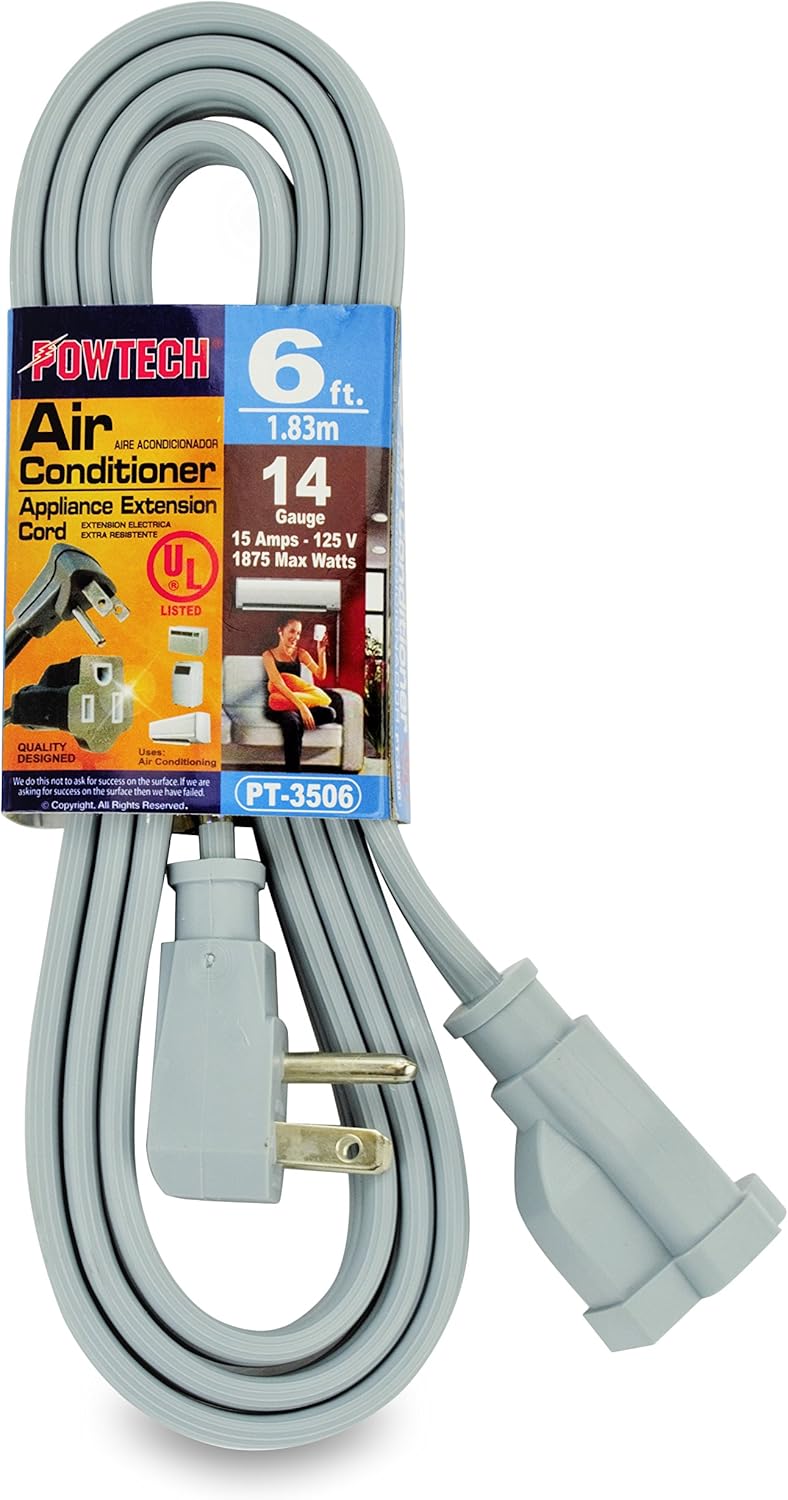
- Gauge (AWG): 14 AWG
- Amp Rating: 15 A, 125 V, 1875 W
- Cord Length: 6 ft
- Plug Type: right-angle 3-prong
- Listing: UL Listed
- Indoor / Outdoor: indoor only
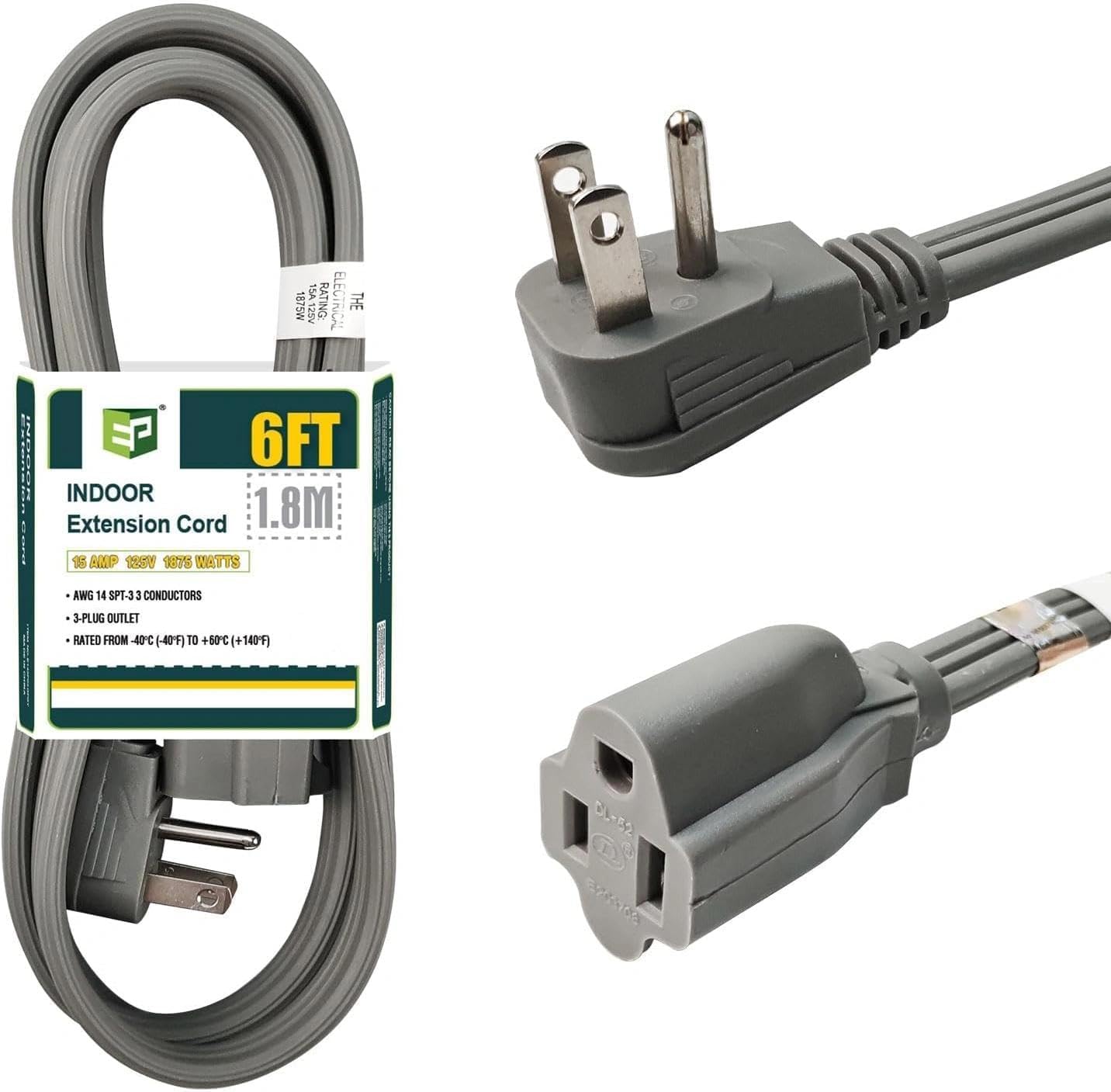
- Gauge (AWG): 14 AWG
- Amp Rating: 15 A, 125 V, 1875 W
- Cord Length: 6 ft
- Plug Type: flat 3-prong
- Listing: UL or ETL, confirm on SKU
- Indoor / Outdoor: indoor only
The POWTECH takes the strongest overall pick. It carries a confirmed UL listing, the exact minimum GE names, on a 14 AWG conductor that holds voltage steady through a chest freezer’s startup surge at just 6 feet.
1. POWTECH 6 ft Appliance Cord Review
The POWTECH bridges a short, dry gap between a freezer and a wall outlet without gambling on an unlisted cord. It’s the safest default for the most common freezer placement: a kitchen, laundry room, or utility closet where the outlet sits just out of reach.
- UL Listed, 14 AWG, 15 A, 1875 W
- Right-angle plug sits flush to wall
- Grounded three-prong construction
- Short 6 ft length limits voltage drop
- Heavy vinyl jacket, indoor use
What We Love About the POWTECH Cord
Why the right angle plug saves the gap behind the freezer
The right-angle plug lets the freezer sit flush against the wall instead of jutting out to clear a bulky plug head. A pinched plug builds heat at the connection point over months, and heat at a plug is an early sign of a failing connection. The 90-degree design routes the cord down and away instead.
Is 14 gauge enough for a low draw chest freezer?
Fourteen gauge covers most chest and upright freezers at 6 feet, since a typical unit pulls only 1 to 2 amps running, well under this cord’s 15 amp rating. The number that actually matters is the surge. Locked-rotor amps, the current a compressor pulls the instant it kicks on, spike several times higher than the running load, and that’s the moment a thin or overly long cord lets voltage sag. Matching the amperage your fridge needs to a cord’s rated capacity, not just its running wattage, is the whole ballgame. At 6 feet, 14 AWG holds that surge without sagging.
What the UL Listing actually certifies here
UL Listed means an independent lab tested this cord’s construction, insulation, and grounding path against a published standard, not that it’s approved for permanent freezer use under fire code. GE names a UL-listed, three-wire, 15-amp cord as the floor requirement if one must be used, and this cord clears that floor. It doesn’t clear the separate question of permanent use, which NEC 400.8 rules out. Unlisted lookalikes sit at nearly the same price on marketplace listings, with no independent testing behind the claims.
Who Should Buy the POWTECH and Who Shouldn’t
The exact buyer this short indoor cord fits
This fits the homeowner whose freezer sits indoors, dry, within 6 feet of a grounded outlet, bridging the gap while a dedicated outlet gets scheduled. Confirm the outlet is a real three-prong grounded receptacle, not a two-prong adapter, and treat the setup as temporary.
The buyer who should skip it and what to grab instead
Skip this cord for a garage, shed, or anywhere cold or damp. The vinyl jacket isn’t rated for that environment and will stiffen or crack by winter, the most common mismatch in this category. Head to the outdoor 12/3 SJTW pick below instead. And if the goal is backup power during an outage rather than reach, wiring for a 12V inverter is a different project worth reading before you buy anything.
- Pros: UL Listed to the exact standard GE names
- Pros: 14 AWG holds voltage under startup surge
- Pros: Right-angle plug clears tight utility spaces
- Pros: Grounded 3-prong, meets minimum appliance spec
- Cons: Indoor-only jacket, no garage or shed use
- Cons: Short 6 ft length won’t reach far outlets
- Cons: Multi-outlet POWTECH SKUs exist; confirm single-outlet version
2. EP 6 ft Heavy Duty Appliance Cord Review
The EP cord covers the same short indoor bridge as the POWTECH at a competitive price, with one detail worth checking before checkout. A solid pick, not a clear upgrade or downgrade.
- 14 AWG, 15 A, 125 V, 1875 W
- Flat, low-profile 3-prong plug
- Indoor vinyl jacket construction
- 6 ft length for short runs
- Budget commodity price point
What We Love About the EP Cord
Does the flat plug really disappear behind the freezer?
The flat plug profile lets the freezer sit close to the wall, freeing up clearance in a tight utility nook a bulky molded plug never could. Where the POWTECH routes its plug down and away with a right angle, the EP keeps a low, flat profile that hugs the wall from the side. Pick whichever shape matches your outlet position.
Where a budget 14 gauge cord earns its price
The EP matches the same 15 amp, 1875 watt, 14 AWG rating as pricier appliance cords, without cutting the conductor gauge to save money. That’s what separates a genuine budget pick from a corner-cut one. The honest gap sits in the listing mark: confirm whether your specific SKU is UL or ETL listed before buying, since both are accredited testing bodies but the mark isn’t always consistent across a brand’s own lineup.
The listing detail buyers overlook at checkout
The listing mark is the only third-party proof this cord was independently tested, and it’s worth thirty seconds of checking before the freezer goes on it. Marketplace clones copy the spec sheet numbers without carrying the real certification behind them. Read the actual listing page for the SKU you’re ordering, and look for the mark printed on the cord itself once it arrives.
Who Should Buy the EP and Who Shouldn’t
The tight budget indoor buyer it fits
This fits a renter or tight-budget buyer who needs a dry, short, indoor bridge and can’t install a new outlet. Keep the outlet within 6 feet and the location dry, treat it as temporary, and inspect the plug and cord for warmth more often than feels necessary.
The buyer who should spend a little more
Anyone running a freezer through a hot garage summer should spend more, because voltage drop risk climbs on any run past a short, dry indoor reach. Redirect to 12 AWG construction or the outdoor SJTW pick above. A few extra dollars buys a cooler-running cord and a longer service life.
- Pros: 1,000 Same 15 A, 1875 W, 14 AWG rating as pricier cords
- Pros: Flat plug profile clears tight spaces
- Pros: Budget price for a short dry run
- Cons: Listing mark varies by SKU; confirm before buying
- Cons: Indoor-only jacket
- Cons: Short 6 ft length limits placement
3. Outdoor 12/3 SJTW Cord Review
The outdoor 12/3 SJTW cord exists for the freezer placement most guides gloss over: a garage, shed, or basement where cold, damp, and longer reach are the norm. It’s the heavier, more durable option of the three.
- 12 AWG heavy-gauge conductor
- SJTW weather-resistant jacket
- Outdoor and damp location rated
- Cold-flexible, flame-retardant build
- Lighted end, grounded 3-prong plug
What We Love About the 12/3 SJTW Cord
Why 12 gauge stays cool where 14 gauge sweats
Twelve gauge wire carries a compressor’s startup surge with less resistance than 14 gauge, meaning less heat and a smaller voltage sag at the plug. Think of it like a garden hose: a wider hose moves the same water with less strain than a narrow one working overtime. In a hot garage where the compressor cycles for hours, that lower resistance keeps the cord cool instead of running warm under load.
Does the SJTW jacket survive a cold garage floor?
The SJTW jacket is rated for outdoor and damp locations, exactly what a garage floor becomes every winter. Indoor vinyl cords stiffen and split where they cross cold concrete within a single season. SJTW construction stays flexible in that same cold, resists UV near a garage window, and shrugs off the moisture an unheated space collects.
The clearance and coil mistake that overheats any cord
Never coil a running extension cord. A coiled cord traps the heat it generates under load instead of letting it dissipate into open air, and this mistake overheats any cord, not just this one. Run it straight, uncovered, and clear of rugs or furniture. A cord warm to the touch is telling you something before it fails outright.
Who Should Buy the 12/3 SJTW and Who Shouldn’t
The garage and outbuilding freezer owner it fits
This fits the freezer owner whose unit lives in a garage, shed, or unheated outbuilding, where cold, damp, and a longer reach are the daily reality. Confirm the receptacle is grounded and on a circuit rated to carry the load, and keep the run as short as the layout allows regardless of how much length the cord offers.
The indoor kitchen buyer who is overpaying
Skip this cord for a dry, indoor, six-foot kitchen run. The weatherproofing and heavier jacket solve a problem that placement doesn’t have, which makes it overkill rather than a safety upgrade there. Go with the POWTECH’s right-angle plug instead for a tidy fit against the wall.
- Pros: AWG resists voltage drop under surge load
- Pros: SJTW jacket rated for cold, damp, outdoor use
- Pros: Lighted end shows power flow at a glance
- Cons: Bulkier plug needs more clearance
- Cons: Costs more than the indoor 14 AWG picks
- Cons: Still temporary use only under NEC, not a fix
Does a safe extension cord for deep freezer use exist?
A safe extension cord for deep freezer use exists only inside a narrow window: short, indoor, grounded, and matched to the compressor’s amp draw. Outside that window, code and common sense both say no.
The National Electrical Code settles the bigger question first. NEC Article 400.8 states that flexible cords must not substitute for a home’s fixed wiring, and a freezer that sits in the same spot for years is exactly the load that rule targets. Use a cord to bridge a few feet to a grounded outlet. Never treat it as the permanent fix.
What retailers and product pages leave off the listing
Retailers print “for refrigerators and freezers” on cords that manufacturers themselves warn against using with those exact appliances. That gap is the frustration this guide closes.
GE and Haier both tell owners to avoid extension cords with freezers whenever possible. GE’s own support documentation, GE Appliances’ official guidance on extension cords with refrigeration appliances, requires a UL-listed, three-wire grounding cord rated 15 amps minimum if one must be used. A sticker reading “appliance ready” is marketing, not a code exemption.
The corrected order of operations:
- Price out a dedicated outlet near the freezer with a licensed electrician.
- Bridge with a short, correctly gauged, listed cord in the meantime.
- Replace the bridge with a real outlet as soon as the schedule allows.
The Buyer’s Guide: Cutting Through the Hype
The three specs that actually decide freezer cord safety
Gauge, ampacity, and length are the only three specs that decide whether a cord is safe for a freezer. Everything else on the packaging is marketing dressing. Gauge is the thickness of the copper conductor; a lower number means thicker wire. Ampacity is how many amps the cord carries without overheating. Length matters because voltage drop climbs the farther current travels down thin wire. Match or beat the freezer’s amp rating, and keep the run as short as the layout allows.
Haier’s freezer extension-cord length and rating requirements cap cord length at 12 feet for chest and upright freezers, and some compact models prohibit extension cords outright. Check your specific model’s manual before assuming any cord is fair game.
Higher gauge number does not mean a better cord
A higher AWG number means thinner wire, not a stronger cord, and that mix-up sends buyers toward the wrong product constantly. Lower gauge number equals thicker copper equals more current capacity. For a longer or hotter garage run, 12 AWG beats 14 AWG every time. For a short, dry, six-foot indoor run, 14 AWG is plenty and costs less.
In theory no, in practice people do it: sorting the myth
In theory, running a freezer on an extension cord long-term violates code. In practice, plenty of owners do it for years without incident, and both facts are true at once. Getting away with it isn’t the same as it being safe. Reported trouble traces to one of two paths: cord damage from pinching or weather exposure, or heat buildup at a loose connection. Neither announces itself until the cord is already warm or cracked.
How we researched, sourced, and verified every claim
Every safety claim here traces to a named code section, a manufacturer’s support documentation, or a UL or ETL listing, not a guess. The electrical rules come from NEC Article 400.8 on flexible cord restrictions, echoed by the International Fire Code’s principle that a bridging cord counts as temporary wiring only within a defined window. The appliance-specific guidance comes from GE’s and Haier’s own support pages. Where a spec couldn’t be confirmed for a specific SKU, that gap is flagged here instead of papered over.
Ownership & Maintenance Guides
The monthly heat check that catches a fire before it starts
Feel the plug and cord once a month while the compressor runs. Warmth at either point is the earliest sign a connection is failing, and this check costs thirty seconds. A warm plug is under more electrical stress than it should be, whether from a loose prong, a worn outlet, or a cord pushed past its rated load. Don’t wait for a burning smell to notice.
Never coil, cover, or run the cord under anything
Keep the cord straight, uncovered, and clear of rugs, furniture, or anything piled on top of it. Coiling or covering a running cord traps the heat it generates, the single most common way a fine cord becomes a hazard. Never tack it under a rug, run it through a pinched doorway, or loop the slack into a tight coil behind the freezer to tidy up the space.
The daisy chain and power strip trap to avoid
Never chain two extension cords together or add a power strip to reach farther. Both practices overload the circuit fast and sit outside what fire code allows. New York City’s fire code spells this out directly in Section 605.5: an extension cord serves one appliance, plugs directly into a wall receptacle, and isn’t a substitute for permanent wiring. One grounded cord, one freezer, straight to the wall.
When to stop and call a licensed electrician instead
Call an electrician the moment a “temporary” cord setup passes the length or duration limit your freezer’s manual allows, because that’s the point where temporary quietly became permanent. Book a dedicated grounded outlet near the freezer’s final spot, not just close enough for now. It’s the last upgrade that ends both the fire risk and the worry behind it.
The Bottom Line Before You Buy Any Cord
The fear this guide opened with, a garage fire while everyone sleeps, comes down to three numbers: gauge, amp rating, and length, matched against your freezer’s manual.
Tonight, measure the distance from the freezer to the nearest grounded outlet and check what’s on that circuit. Buy the shortest, correctly gauged, listed cord that reaches, treat it as a bridge, and schedule the dedicated outlet that ends the guessing for good. For the fuller picture on backup power, read our full refrigerator power backup breakdown. That’s the upgrade that ends the worry, not just moves it behind the appliance.
Frequently Asked Questions
Can you safely plug a deep freezer into an extension cord? Yes, but only as a short-term bridge, not a permanent setup. Use a UL or ETL-listed, grounded, correctly gauged cord for the shortest possible run, then replace it with a dedicated outlet.
What gauge extension cord do I need for a chest or upright freezer? Fourteen AWG covers most freezers on a short indoor run under 6 feet. Move up to 12 AWG for a garage, shed, or any run where length or cold exposure work against you.
How long can the extension cord be before it damages the compressor? Keep it as short as your layout allows, and never exceed what your freezer’s manual states. Haier caps its freezers at 12 feet, and longer runs let voltage sag exactly when the startup surge needs it most.
Does an extension cord need to be UL-listed, or is ETL okay? Either mark works, since both are accredited independent testing labs. What matters is confirming the mark is actually printed on the cord you receive, not just claimed on the listing page.
Will using an extension cord void my freezer’s warranty? It can, depending on the manufacturer and how the cord was used. Check your freezer’s warranty language directly, since GE and Haier both discourage extension cords.
Sources:
- GE Appliances’ official guidance on extension cords with refrigeration appliances
- Haier’s freezer extension-cord length and rating requirements
- NYC Fire Code Section 605.5, Extension cords

Katie Lee has over 20 years of experience in the kitchen. She helps homeowners find the right appliances for their needs to sets up a perfect kitchen system. She also shares helpful tips and tricks for optimizing appliance performance.